
The Illustrated Atlas
Eight places from the published adventures, revisited through prose and artwork.
These illustrations are interpretive companions rather than maps or documentary records. Each entry links back to the published passages that inspired it; open only those within your reading progress.
01 · The TARDIS kitchen · through Book 2
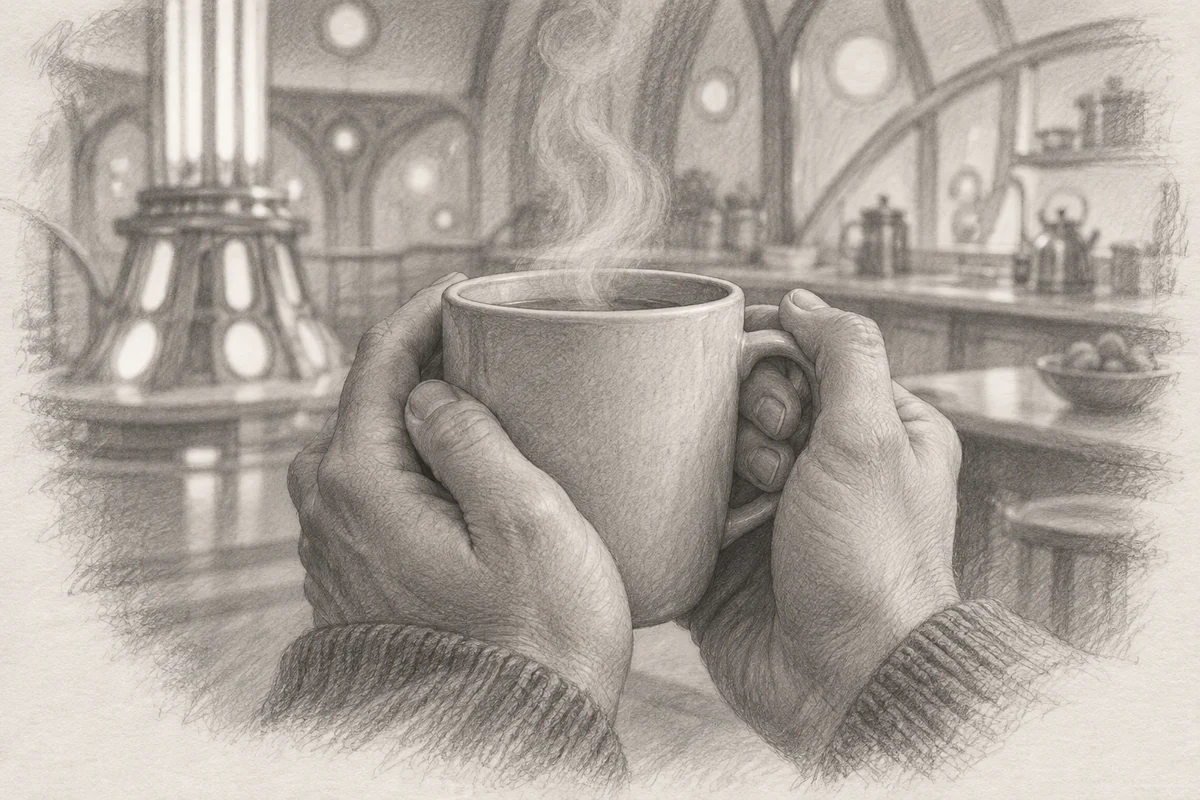
The opening of The Spiral Accord gives the ship a domestic scale. The Doctor holds a mug in both hands and lets its warmth settle into his knuckles, allowing travel to make room for recovery. A kitchen aboard the TARDIS matters because the ship is more than transport: it contains the ordinary rituals that let its travellers return to themselves between impossible places.
02 · The TARDIS music room · through Book 2
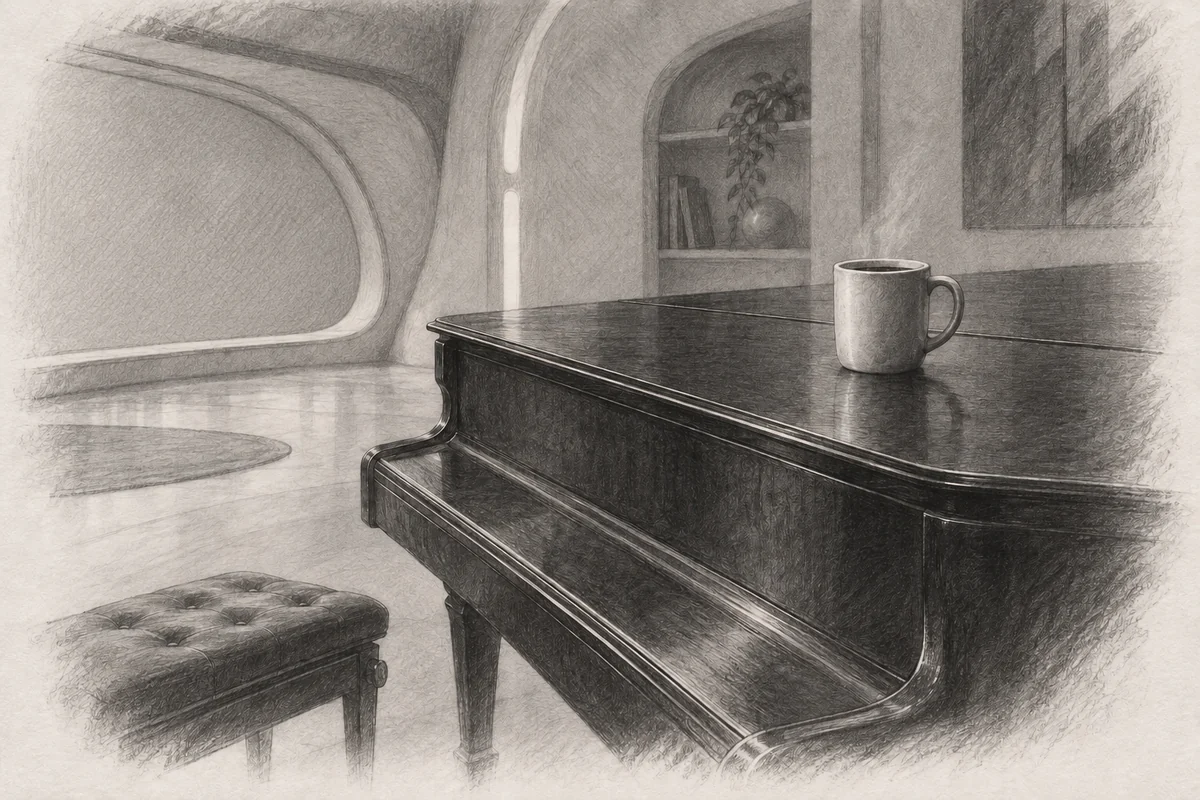
Ava’s coffee cools on the piano lid while the thread from the Loom remains around her wrist. The room places an ordinary object beside the residue of an extraordinary journey. It is a quieter kind of landmark: a place where someone can carry a history she has not finished absorbing, and where silence can be part of the music rather than an absence from it.
Source: Book 2 · Chapter Two: Tea Leaves and Trace Signals · passage 59
03 · Miridell’s Carnival · through Book 4
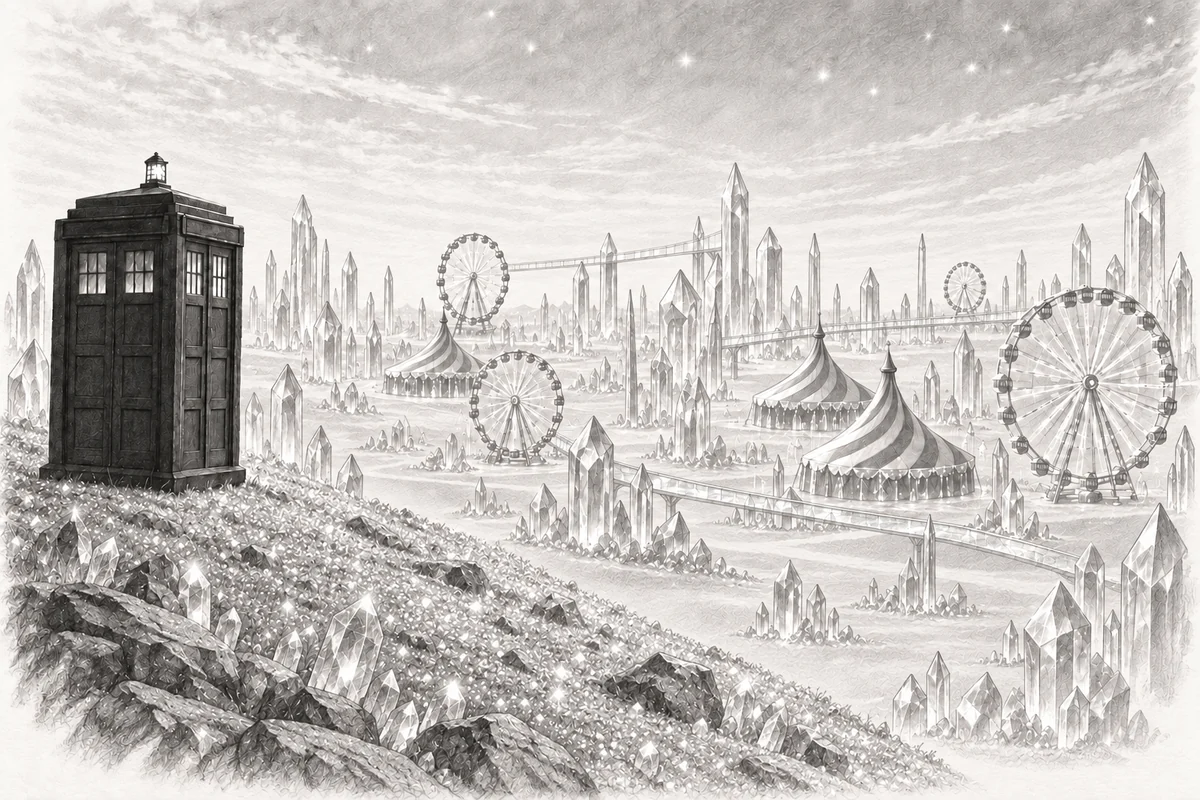
Carnival of Glass opens on spiralling tents, prismatic Ferris wheels and walkways that scatter sunlight through the air. Pleasure has been made architectural. Visitors move through a place designed to be looked at, dazzled by surfaces before they understand what the Carnival asks of the people inside it. The first view is beautiful; that beauty is precisely what gives the later unease its power.
04 · Orbitum Concordia’s reception platform · through Book 5
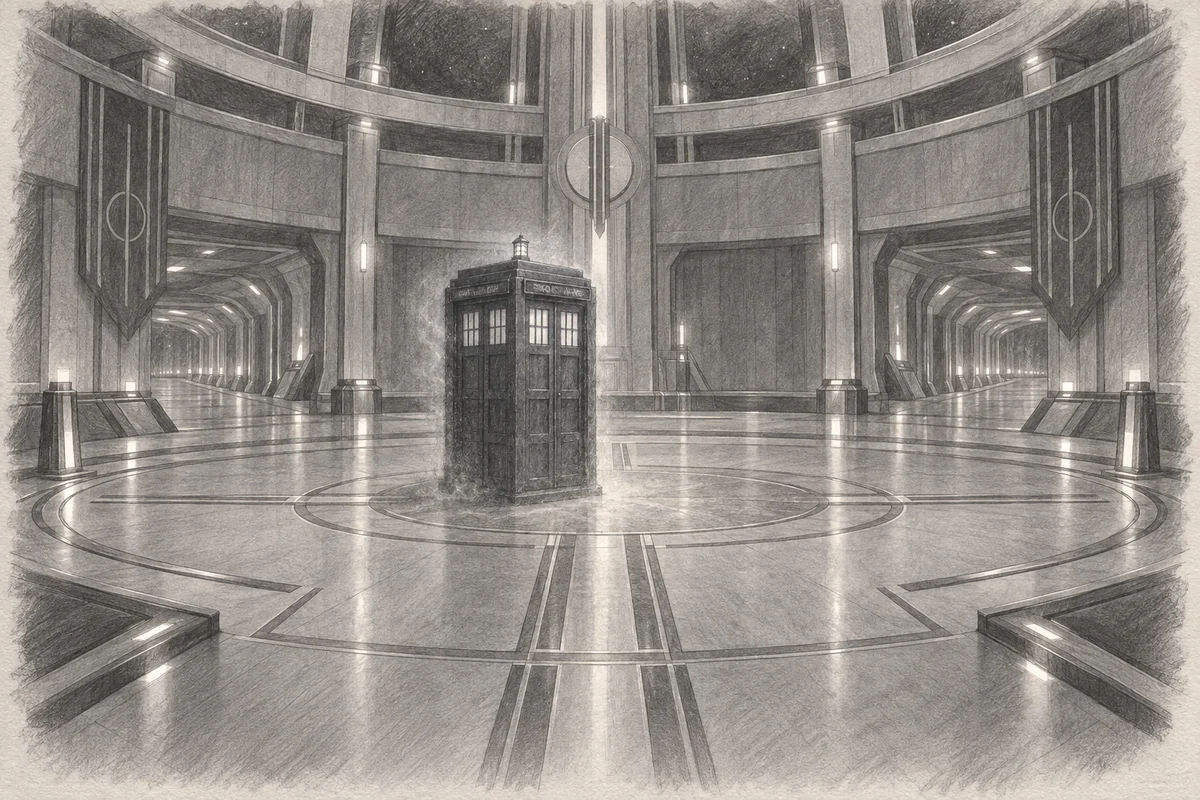
The Shattered Treaty begins with Orbitum Concordia registering the TARDIS as an anomaly. Arrival is already an encounter with an administrative system. The reception platform stands between travel and the rules governing the station, its disciplined order raising the questions that drive the investigation: who benefits from that order, who is treated as an exception, and what happens when a person refuses the category assigned to them?
Source: Book 5 · Chapter One: Arrival at the Edge · passage 5
05 · Florence’s night street · through Book 6
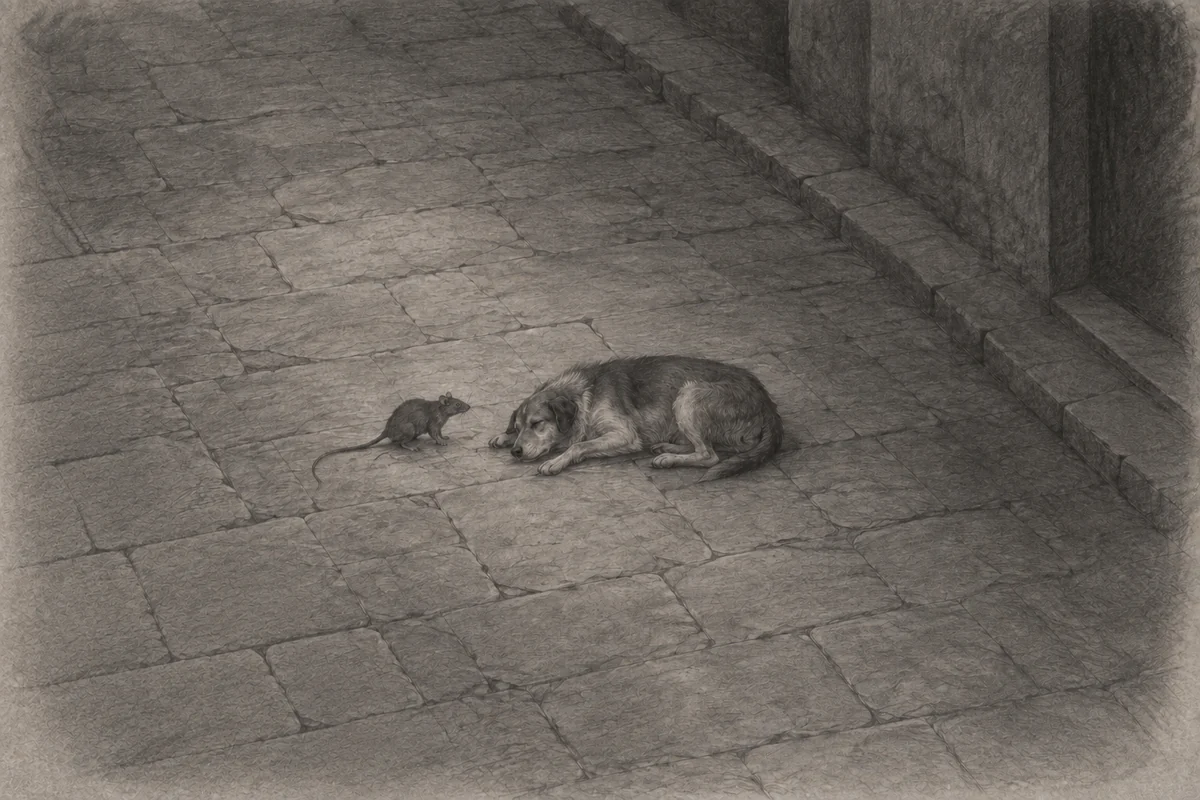
Of Time and Tragedy brings the travellers to Florence during the plague, but this street contains no heroic confrontation. A rat pauses beside a dog and moves on. The small moment keeps the city larger than the visitors’ task: ordinary surfaces, animals and unseen lives continue around the people trying to intervene. History is not scenery here, and the speculative danger never replaces the human disaster already unfolding.
Source: Book 6 · Chapter One: The Weight of Bells · passage 85
06 · The hidden memory chamber on Gallifrey · through Book 7
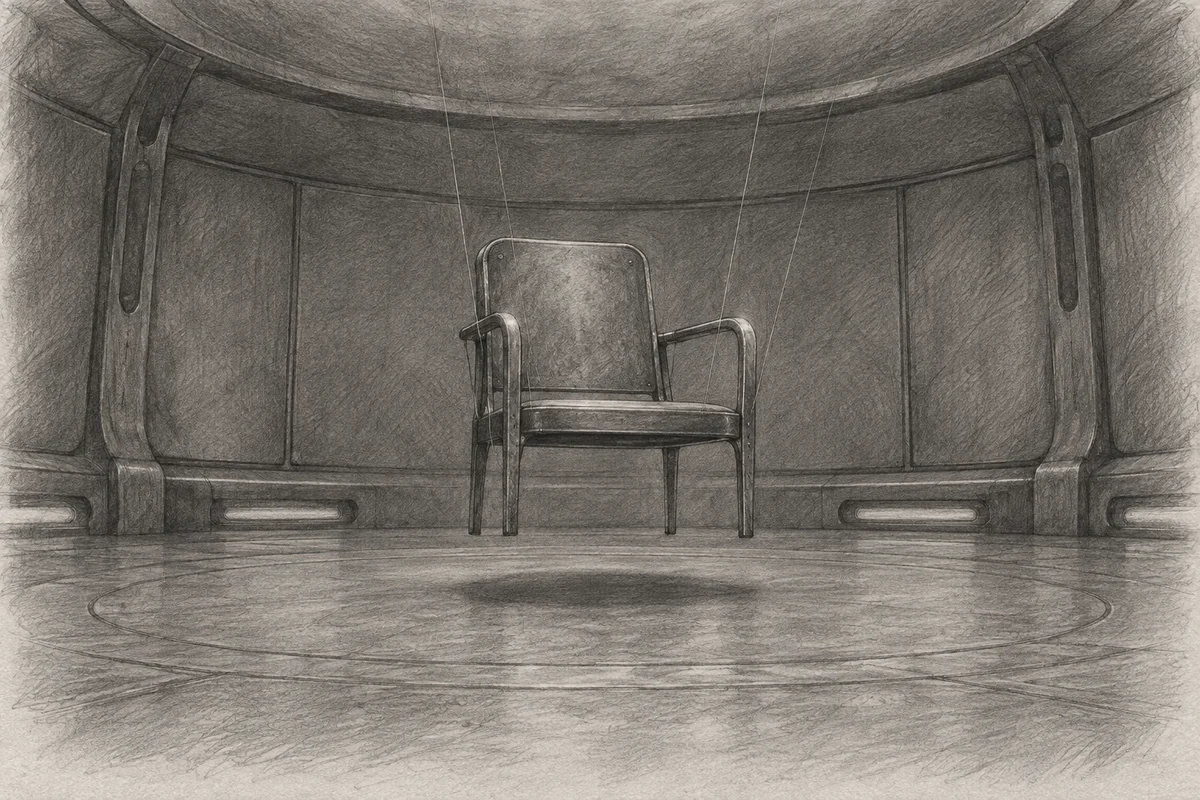
The travellers reach this low circular chamber while investigating the suppression of Raven’s past. By the selected moment, the younger figure has gone and the chair hangs empty on its fine threads. The room makes memory physical: something confined, examined and manipulated by a programme that preferred obedience to testimony. What lingers is not simply machinery, but the pressure of what was done there and the resistance that survived it.
Source: Book 7 · Chapter Two: The Girl in the Memory Cage · passage 544
07 · Mnem and the Old Weave · through Book 19
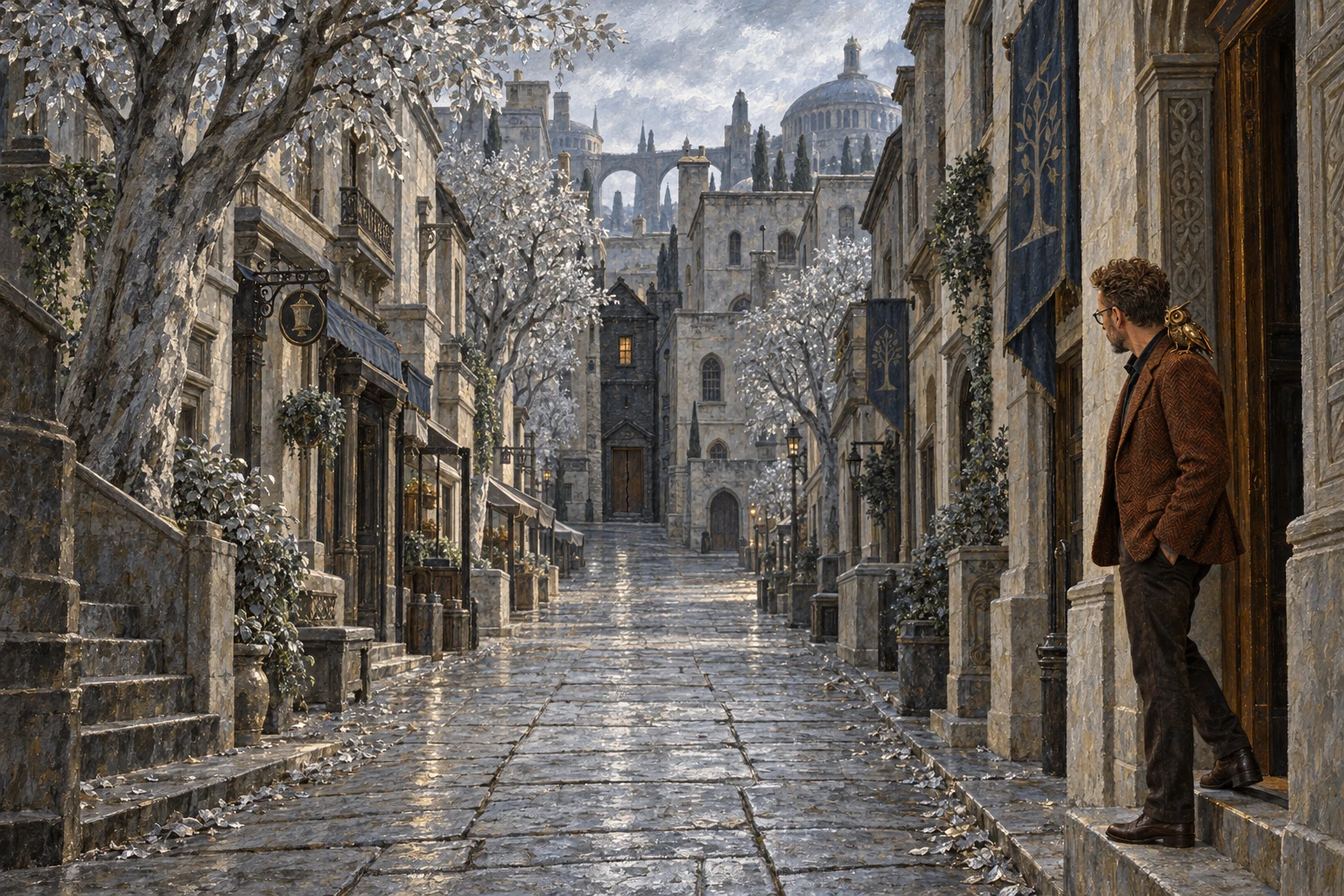
Mnem first appears as pale stone beneath an overcast sky, softened by ash-barked trees with silver leaves. Callum’s map later places the Memory House at the deepest point of the Old Weave, the city’s oldest and most saturated quarter. The two views—street and district—bring the place into focus around a traveller at a doorway, while the city continues beyond him through the work and histories of its residents and archivists.
Source: Book 19 · Chapter One: The TARDIS Has Opinions · passage 55 · Book 19 · Chapter One: The TARDIS Has Opinions · passage 142
08 · Jordan, Kowloon · through Book 16

The Hong Kong Chronicle gives the travelling company a densely inhabited urban setting. In Jordan, shops, pedestrians and night light surround the Doctor, Raven and Roxi instead of receding into a theatrical backdrop. Their investigation begins inside other people’s errands, work and conversations. The city does not belong to the travellers simply because the story follows them; they move through a place whose life was already in progress.
Source: Book 16 · Chapter 2 — A City That Trades in Tomorrow · passage 114 · Book 16 · Chapter 2 — A City That Trades in Tomorrow · passage 132